
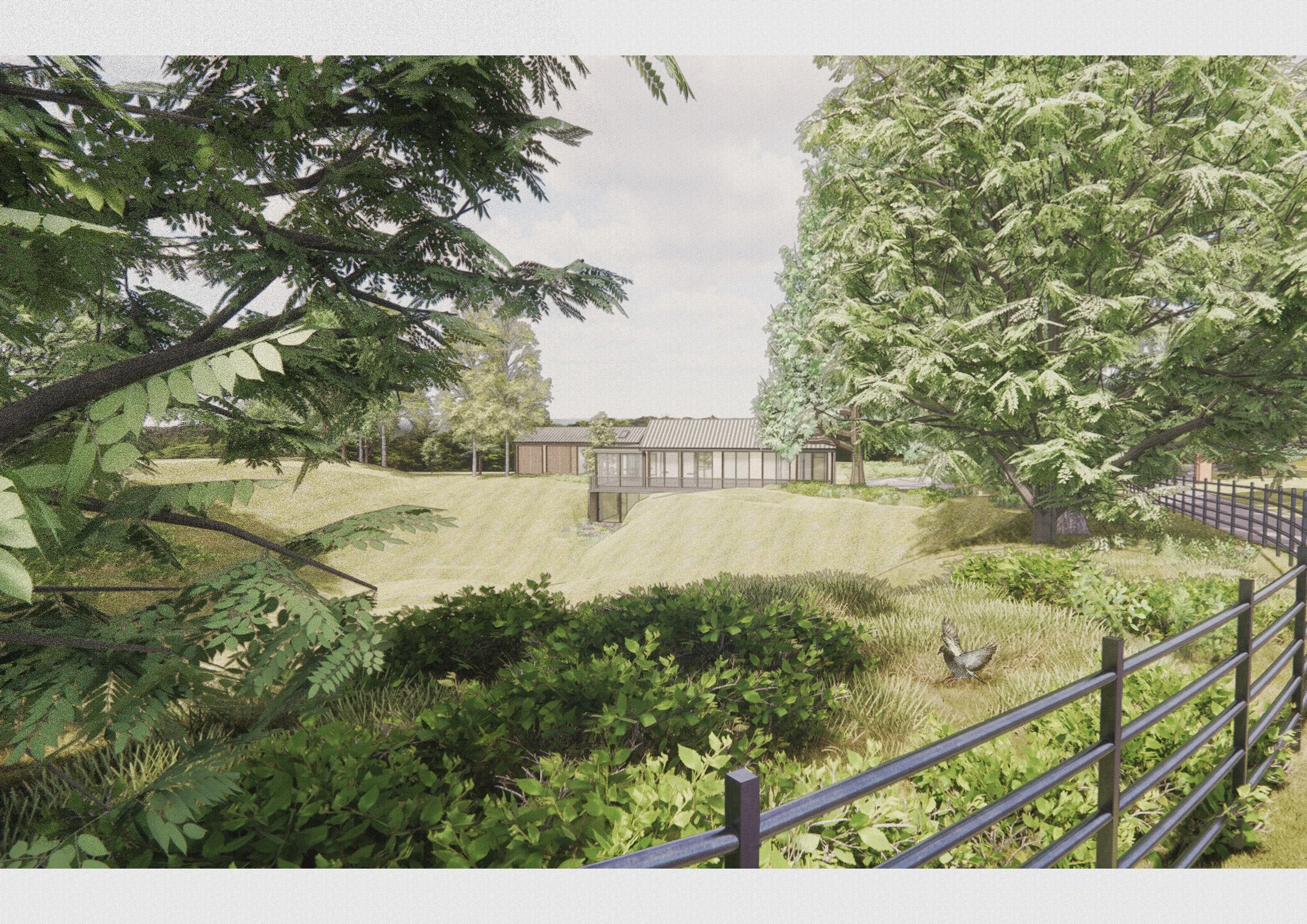
The Dower House, Berkshire
Location: Pangbourne, Berkshire
Client: Private Individual
Status: Planning
This project involves the sensitive restoration and conversion of two redundant barns on a private estate overlooking the Thames Valley in Pangbourne. Designed as a later-life dower house, the scheme reuses existing structures while enhancing the setting within the North Wessex Downs Natural Landscape.
Our clients, having lived abroad for many years before returning to the UK, sought to create a downsized and manageable home within the grounds of their family estate. Their ambition was twofold: to repurpose two tired agricultural barns into a single dwelling of quality and character, and to provide a flexible home that could accommodate their needs in later life.
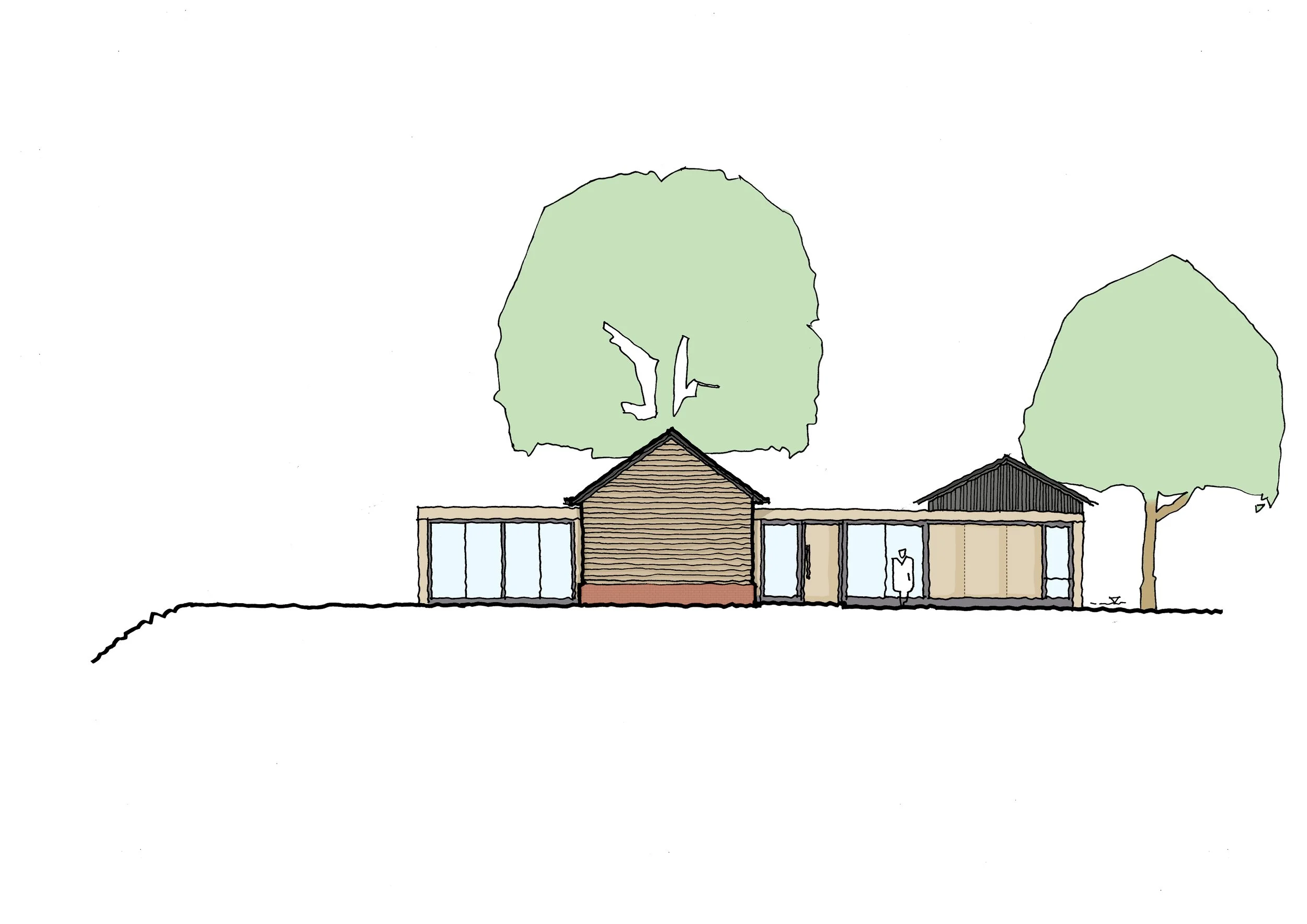
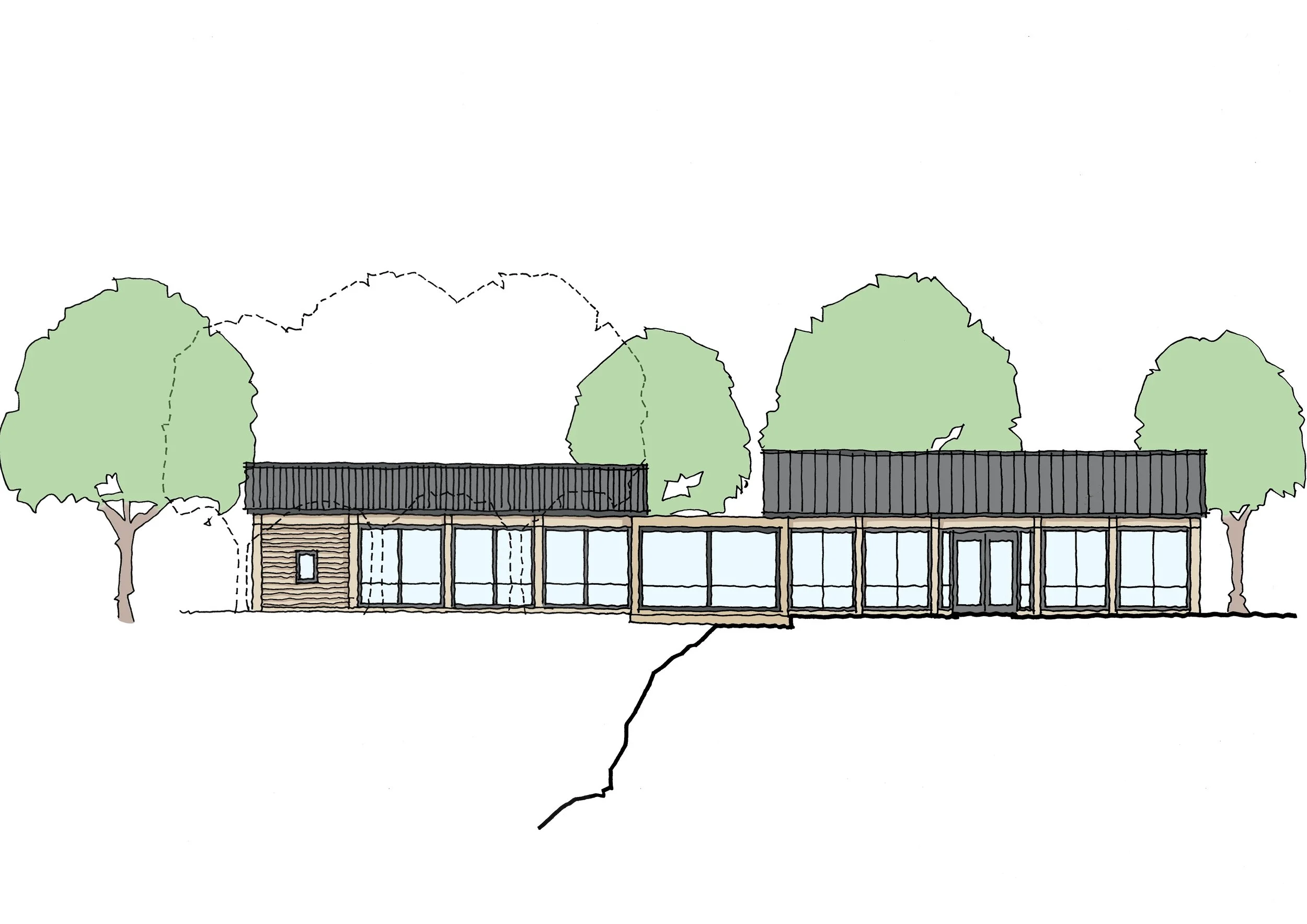
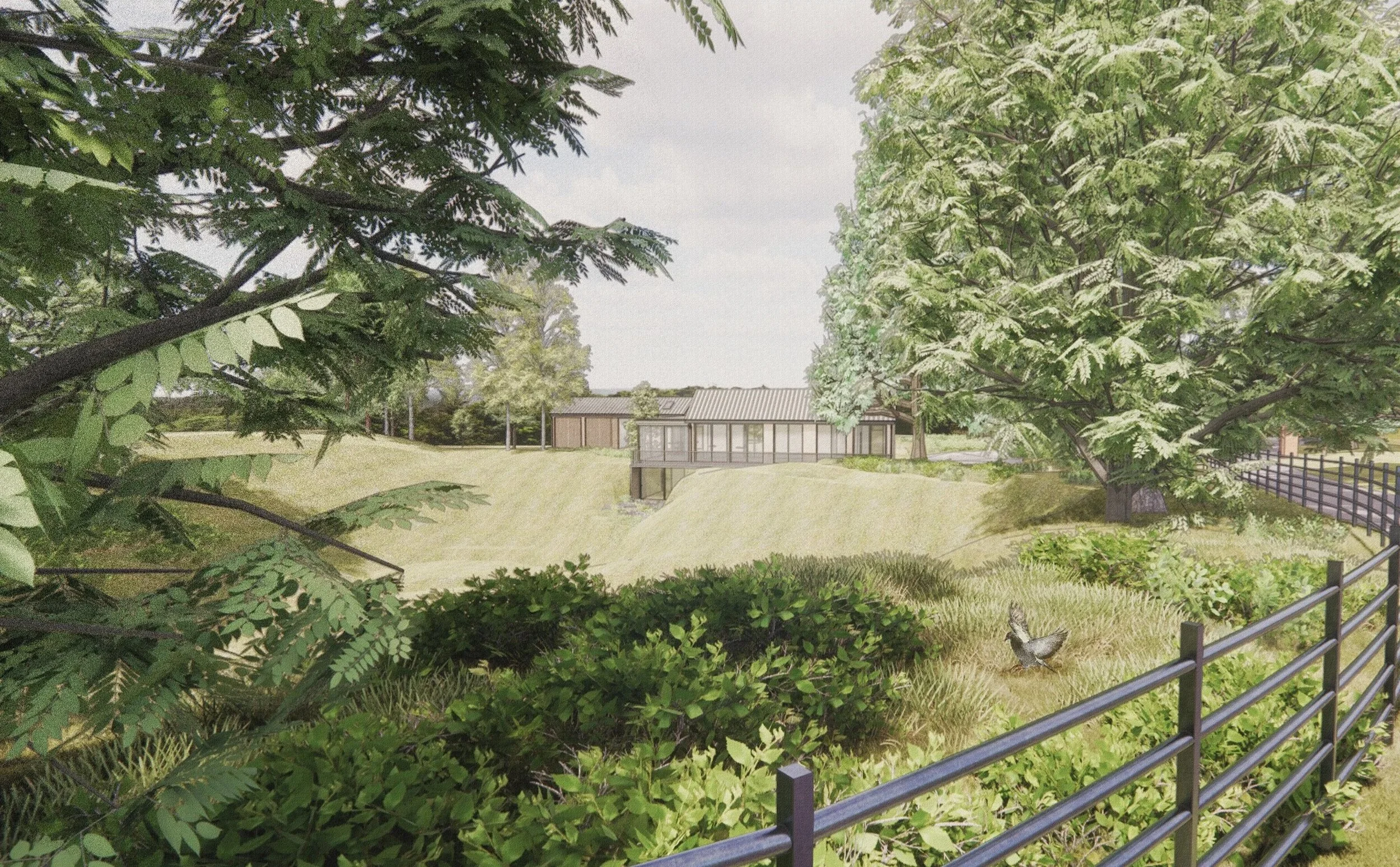
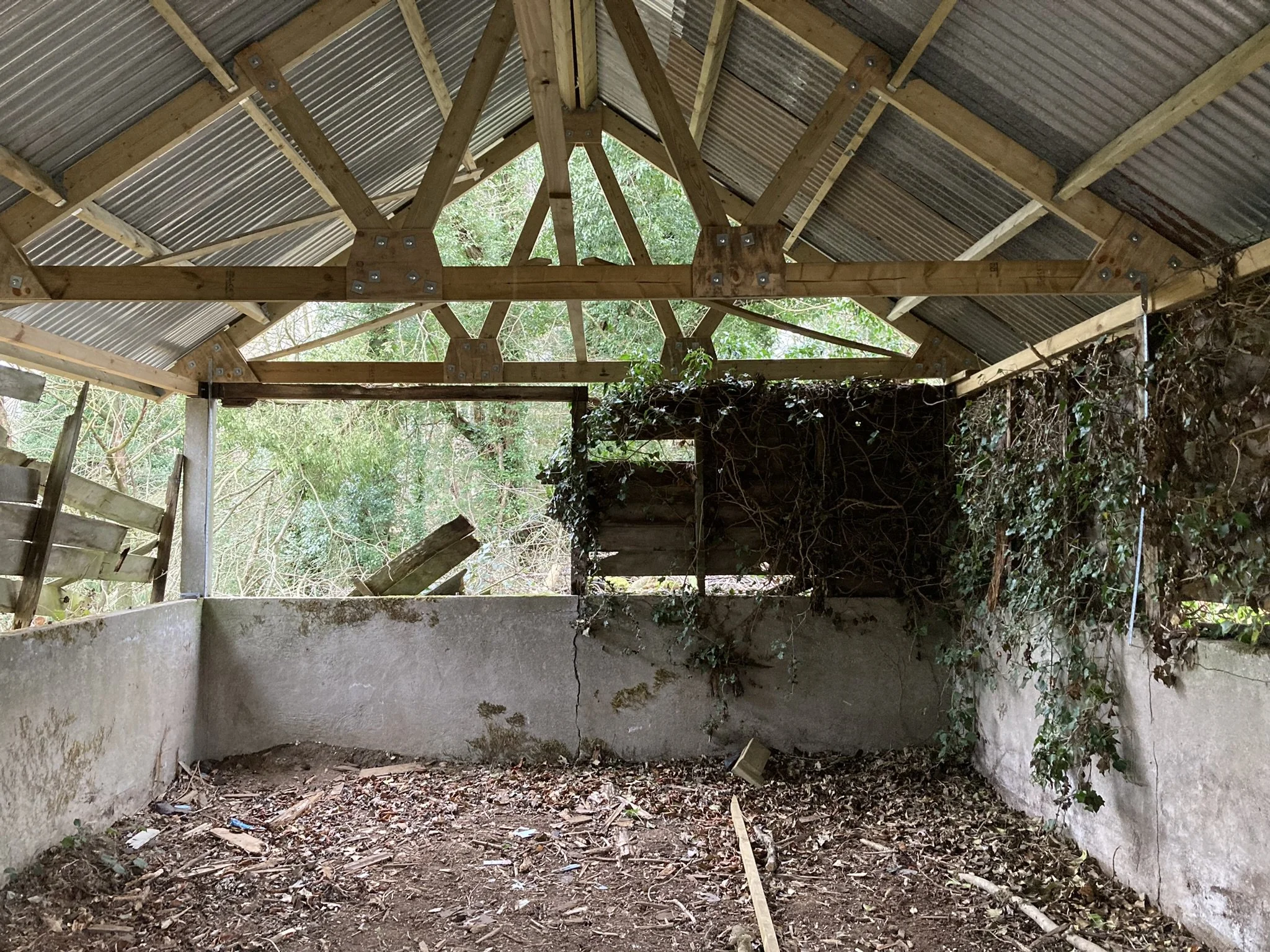
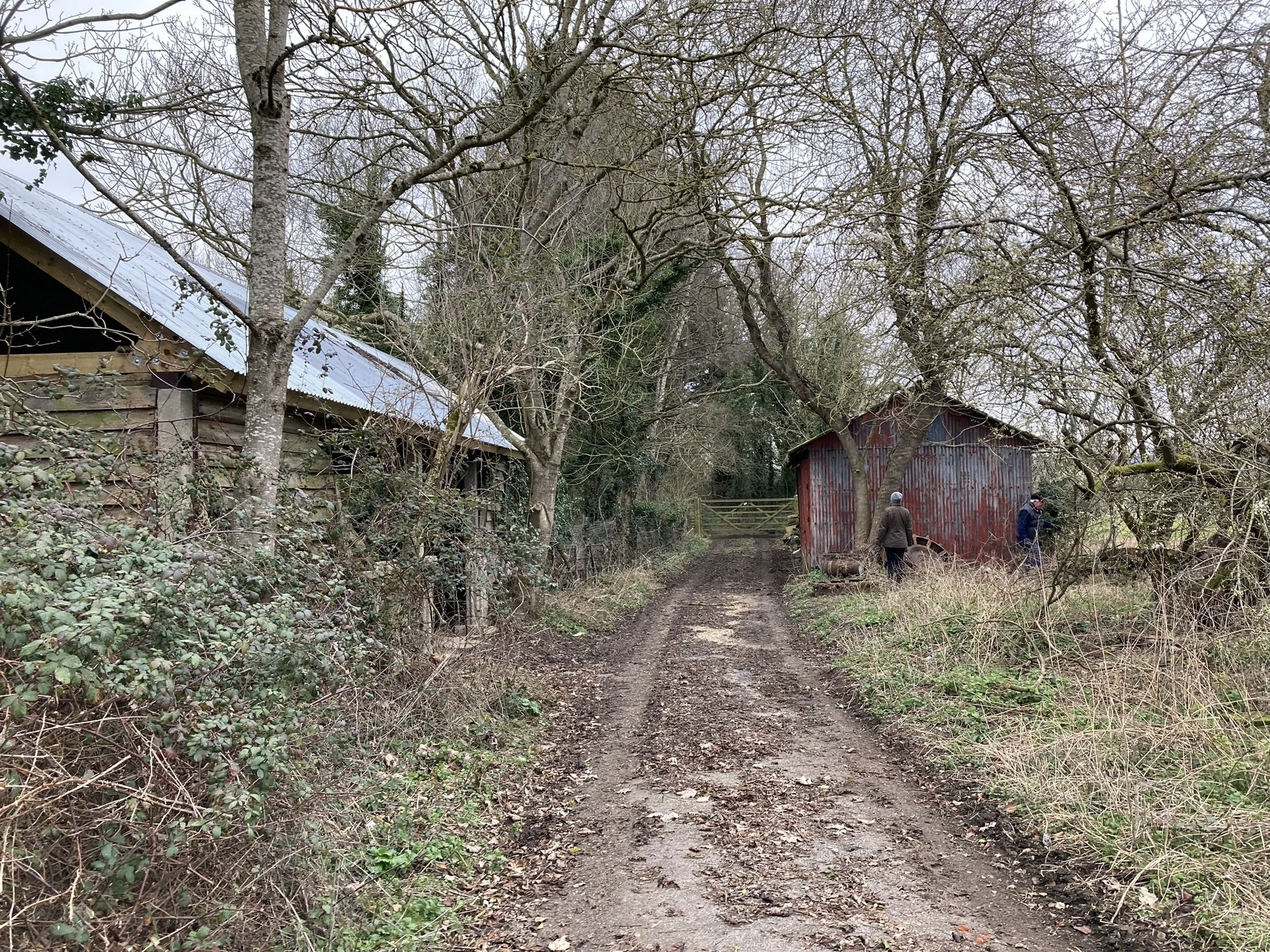
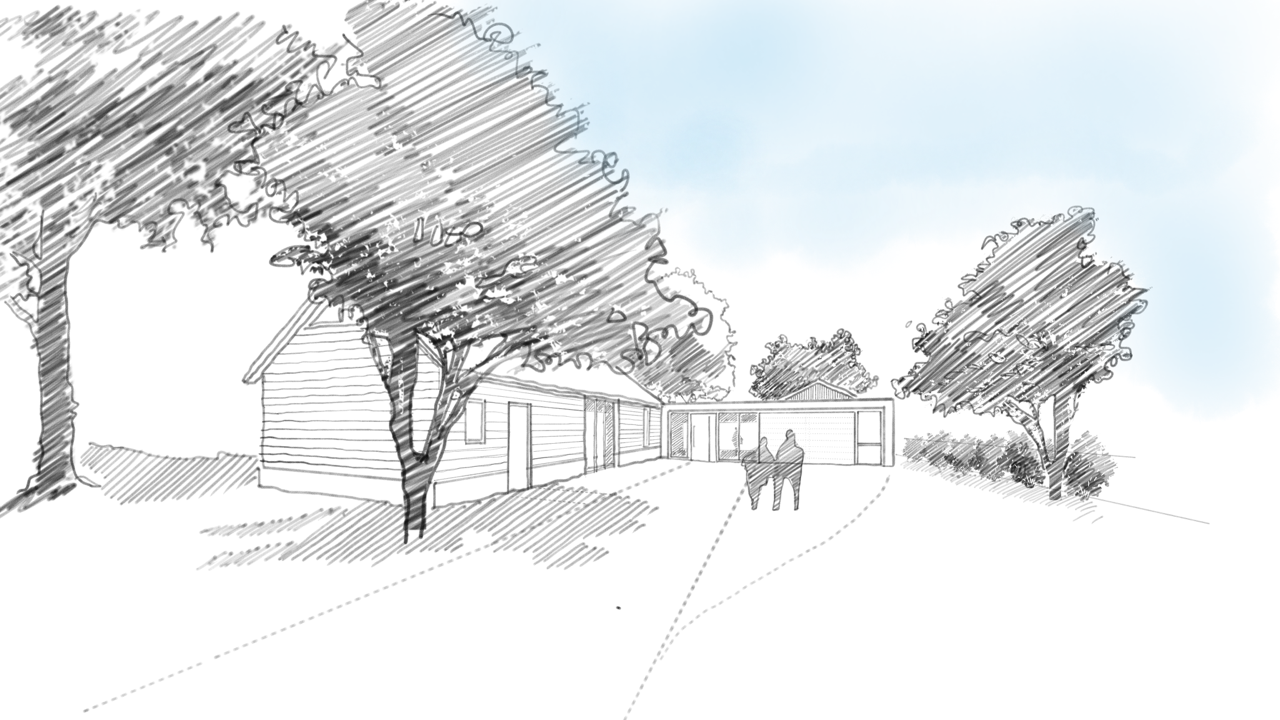
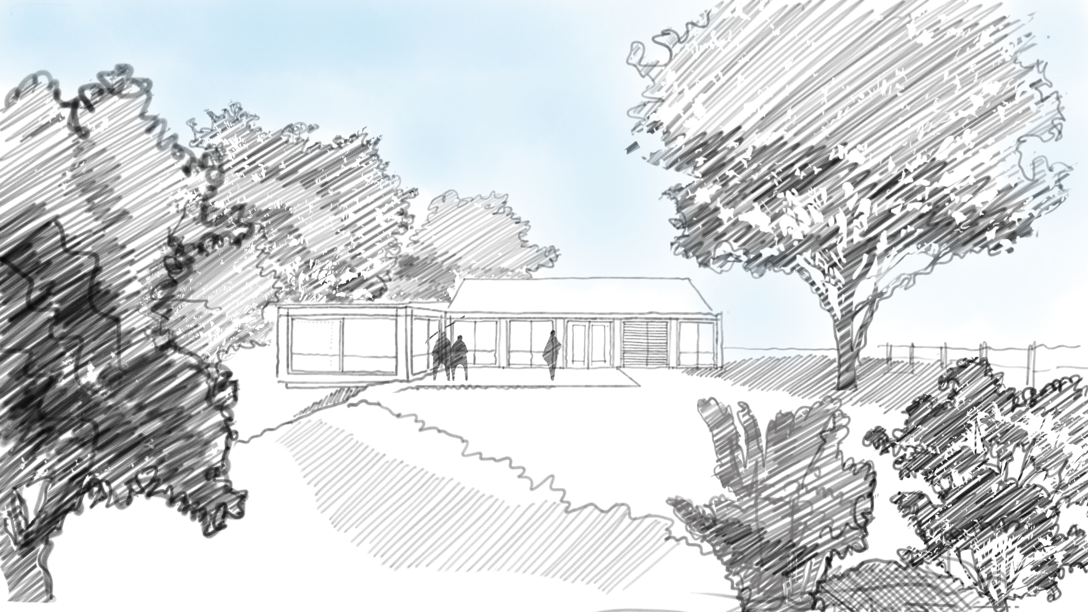
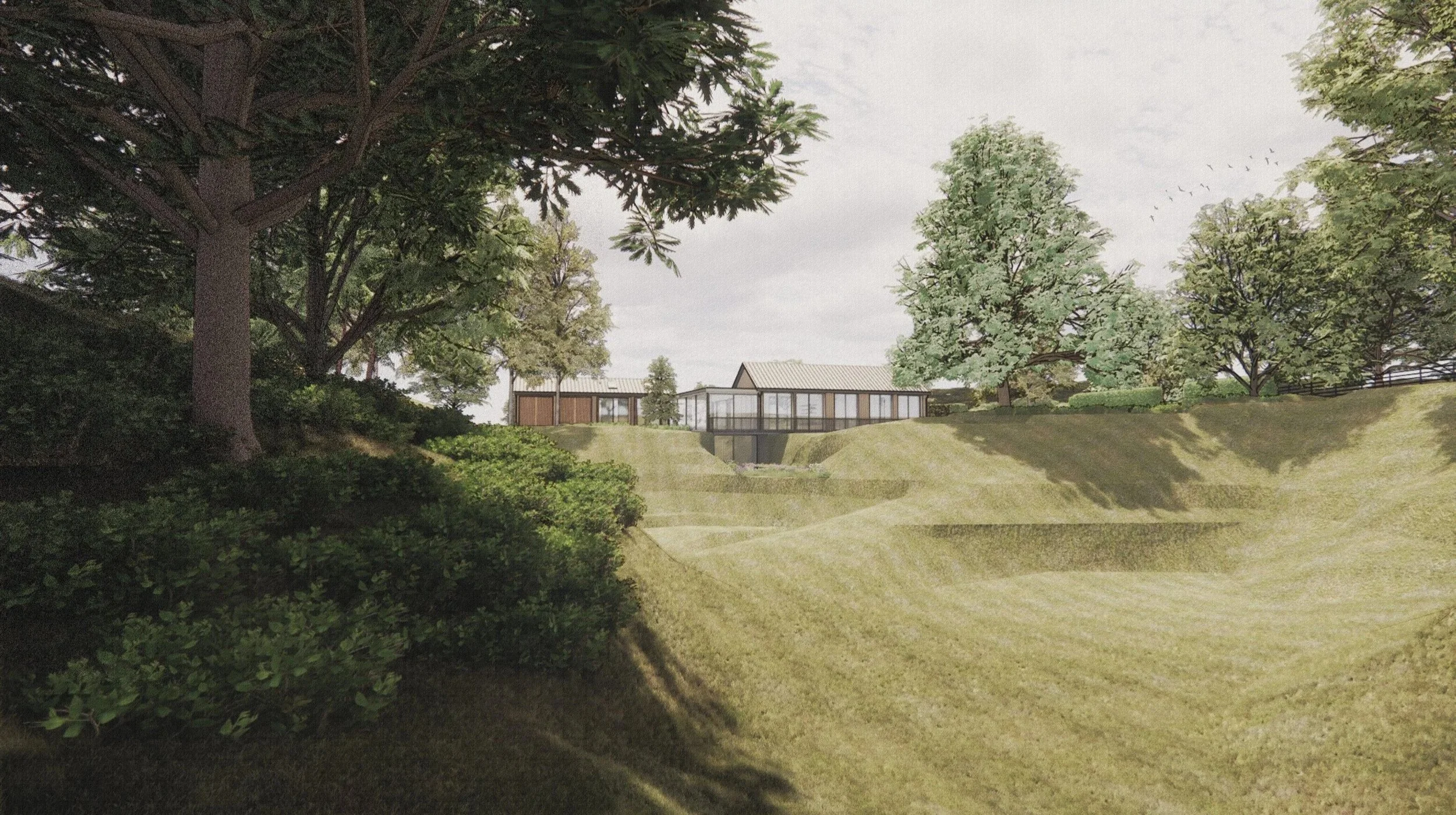

As the site lies within the North Wessex Downs Natural Landscape, planning posed significant challenges. New-build dwellings are generally resisted in this location; however, policy allows for the conversion of redundant barns under strict conditions. Key considerations included structural soundness, visual impact, impact on biodiversity, and compatibility with neighbouring properties. Pre-application discussions with West Berkshire Council helped shape a design that both addressed planning policy and responded positively to the landscape.
The design process began with a careful assessment of the barns’ structure and setting, supported by reports from structural, ecological, and arboriculture consultants. A pre-application enquiry established the planning framework and confirmed that the principle of conversion could be acceptable, provided the scheme retained agricultural character and improved the site’s contribution to the wider landscape.
The two barns, one steel-framed and clad in corrugated sheeting, the other predominantly timber-framed, sit just metres apart. Rather than replace them, the design retains and restores their existing forms, connecting them with a lightweight glazed link. Inspired by the client’s interest in modernist precedents such as Mies van der Rohe’s Farnsworth House, the link is designed to be as transparent as possible, allowing views through to the surrounding trees and landscape.
Internally, the barns are repurposed according to their proportions: the northern barn houses guest bedrooms and a carer’s suite across two levels, while the southern barn provides ground-floor living spaces and the principal bedroom. The glazed link becomes the central entrance and social heart of the home, with a basement beneath accommodating plant, utility, and study spaces.
The scheme balances sensitivity to context with modern functionality. By lowering internal floor levels in the northern barn, generous ceiling heights are achieved without altering the roofline. Glazing is minimised on more sensitive elevations to protect dark night skies and avoid overlooking neighbours, while larger openings are oriented westward to frame views across the former chalk quarry, which will be transformed into a landscaped garden.
Materials have been selected to reflect the barns’ agricultural origins while giving them a renewed, refined quality. Vertical timber cladding replaces the existing corrugated panels, unifying both barns with a consistent, rural aesthetic. Roofs are finished in profiled metal sheeting, echoing the original agricultural construction. Slim aluminium-framed glazing provides a crisp contrast, while the glazed link creates a contemporary counterpoint to the solidity of the barns.
Sustainability is integral to the design. The project adopts a “fabric first” approach, with high levels of insulation and airtightness, supported by renewable technologies such as air-source heat pumps. By reusing the existing structures, the scheme significantly reduces embodied carbon compared to new-build alternatives. Landscaping proposals further enhance biodiversity, retaining mature trees and introducing new planting sympathetic to the rural setting.
For the clients, the project offers a carefully considered home that supports independent later-life living within a much-loved estate. For the local area, it represents a positive transformation of a visually tired corner of land: replacing decaying barns with a dwelling that is both discreet and architecturally striking. For the wider landscape, it delivers an enhancement to the North Wessex Downs, turning a blight into a feature that complements its setting.