

7 Station Road, Watford
Location: 7 Station Road, Watford
Client: Landchain Development Ltd
Status: Planning
7 Station Road is a planning submission for the redevelopment of a long‑vacant 1960s former bank opposite Watford Junction Station. The proposal replaces an underused building with a contemporary mixed‑use scheme that introduces flexible commercial space at ground floor and 24 new apartments above, while improving the public realm and addressing several long‑standing constraints on this prominent gateway site.
The site sits within a complex urban setting influenced by large‑scale commercial buildings, fine‑grain Victorian housing, significant pedestrian footfall, and two nearby heritage assets. These conditions presented several challenges: overshadowing and overlooking from the adjacent TJX headquarters, a narrow lane without a safe pedestrian route, a sensitive boundary with a two‑storey terraced house, and inactive street edges at a key town centre arrival point. The proposed design responds directly to these issues.
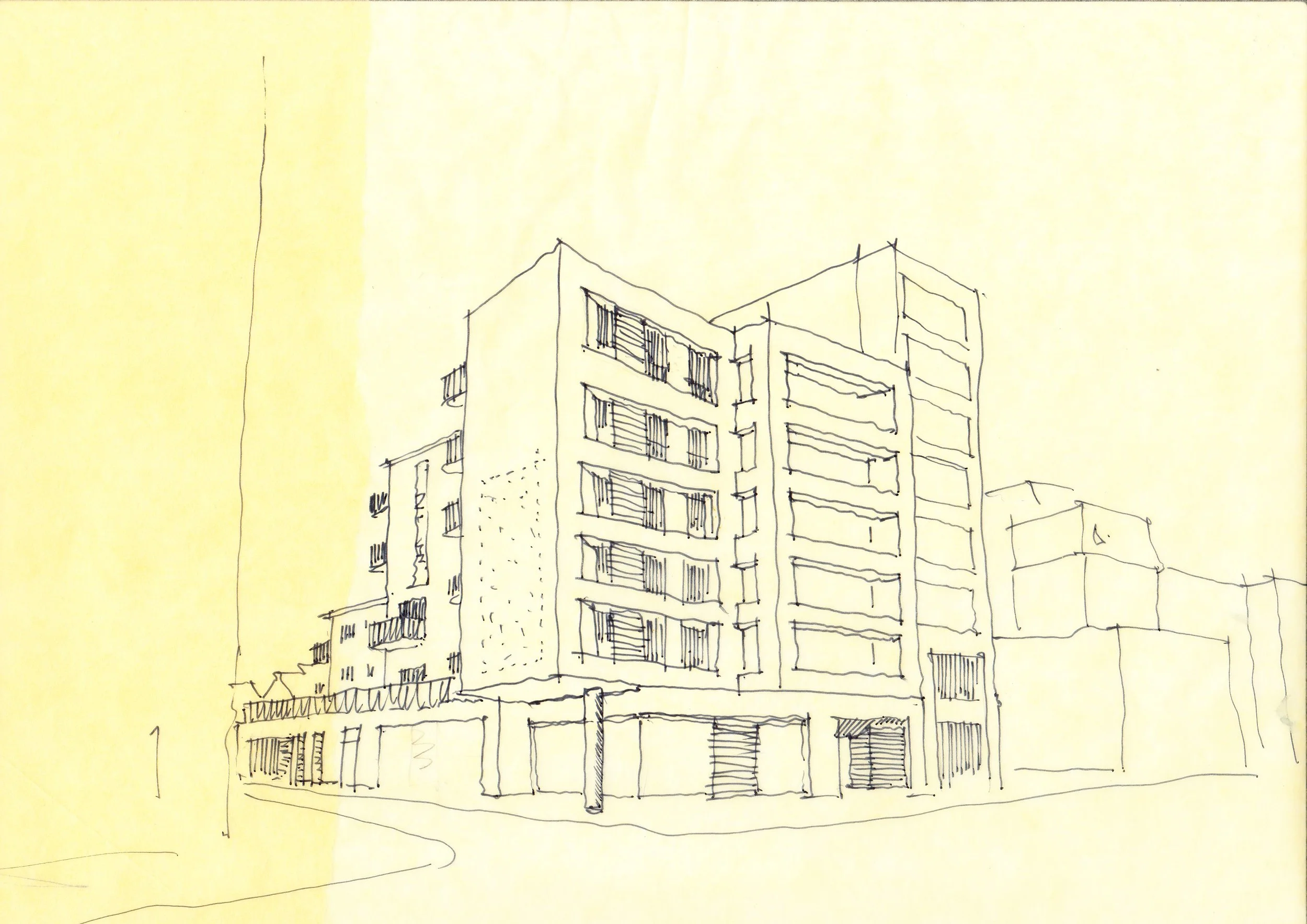

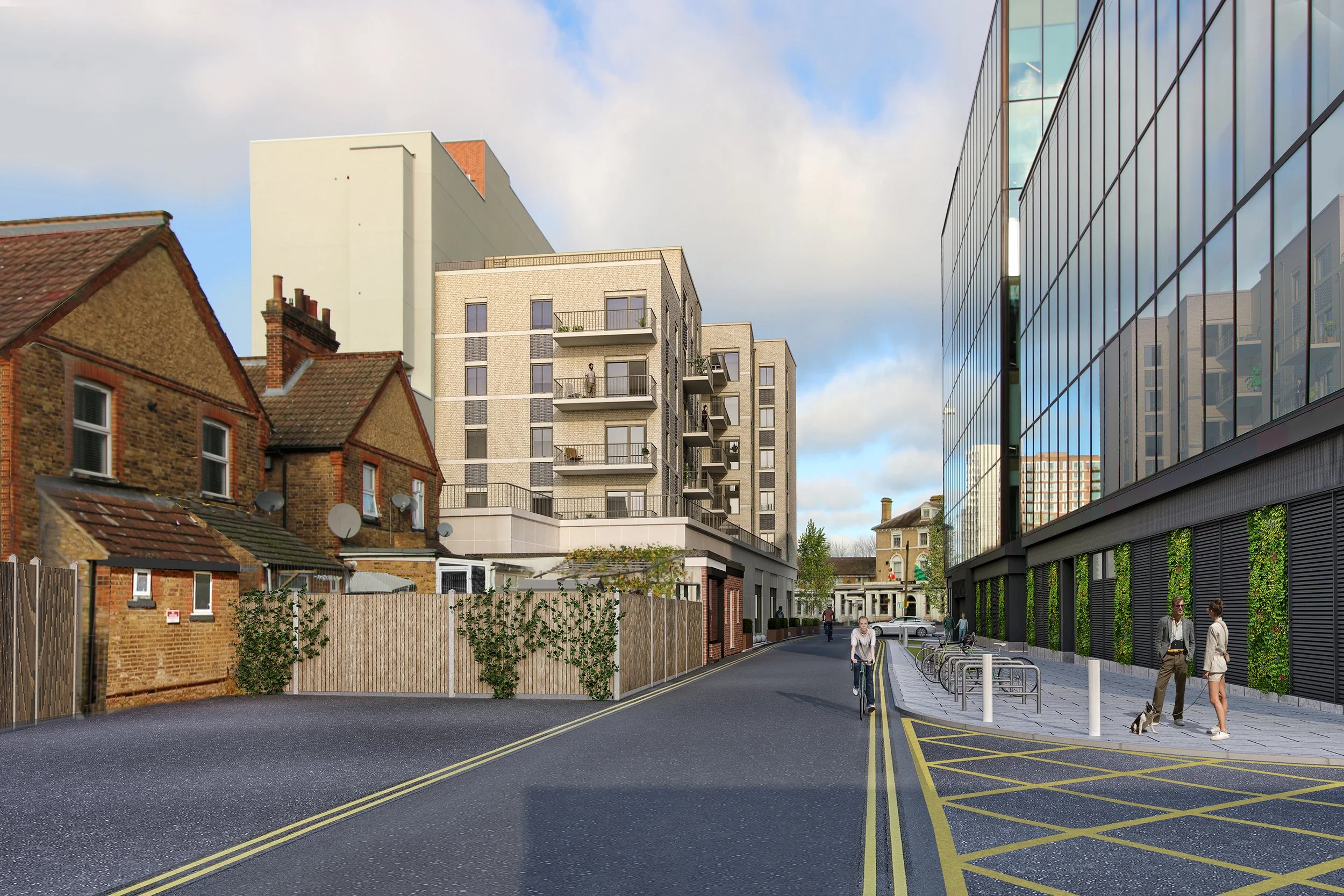
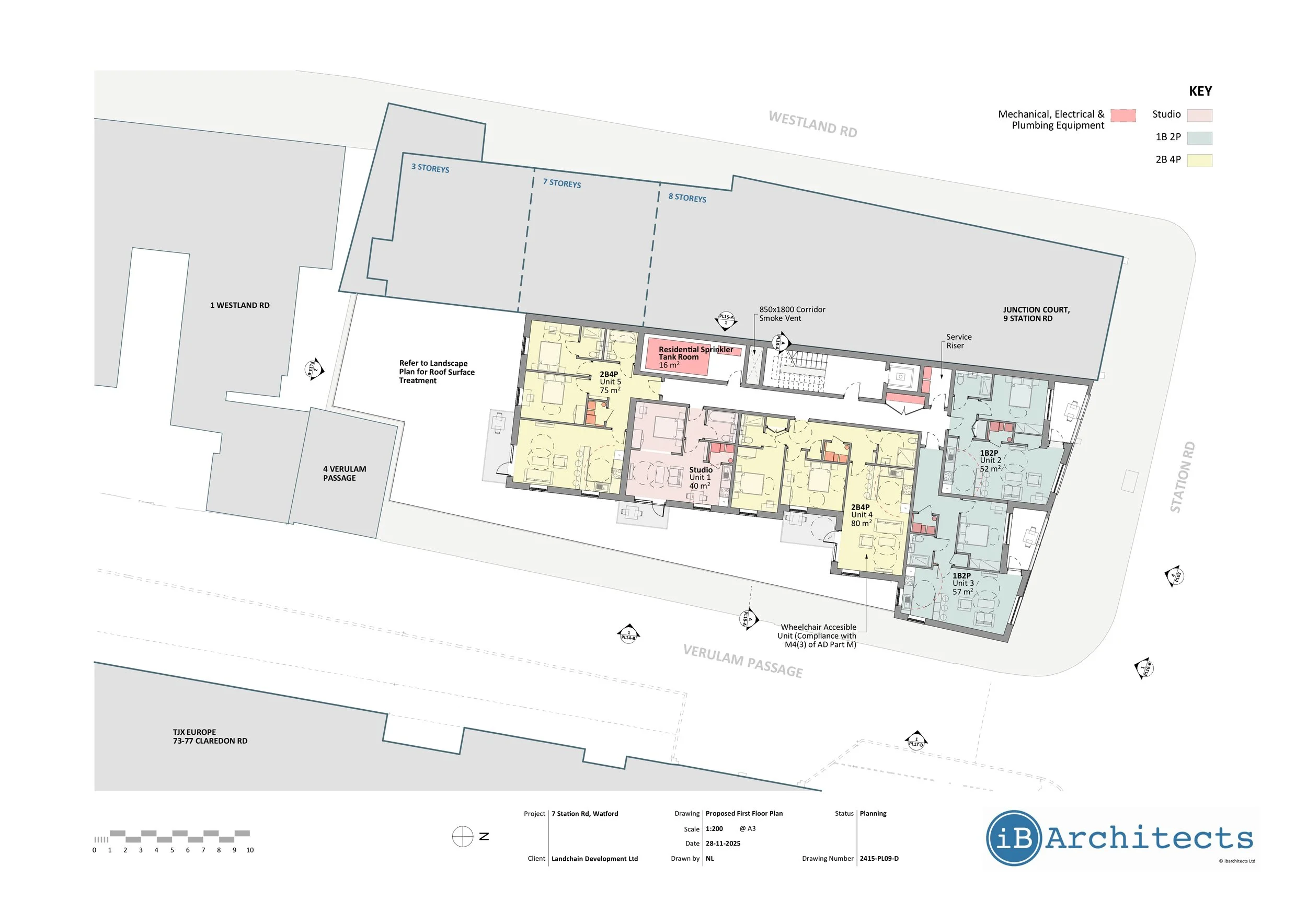
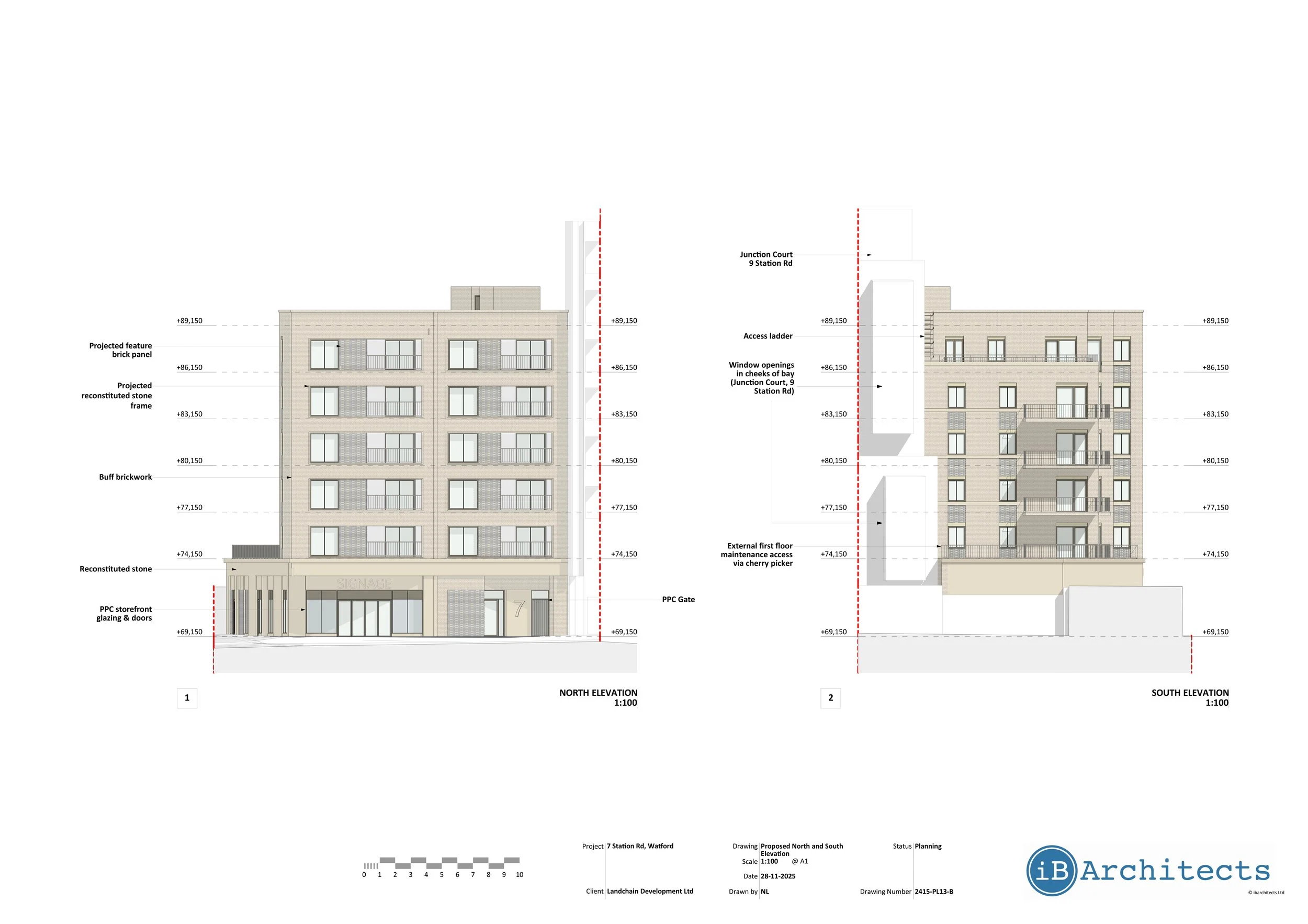
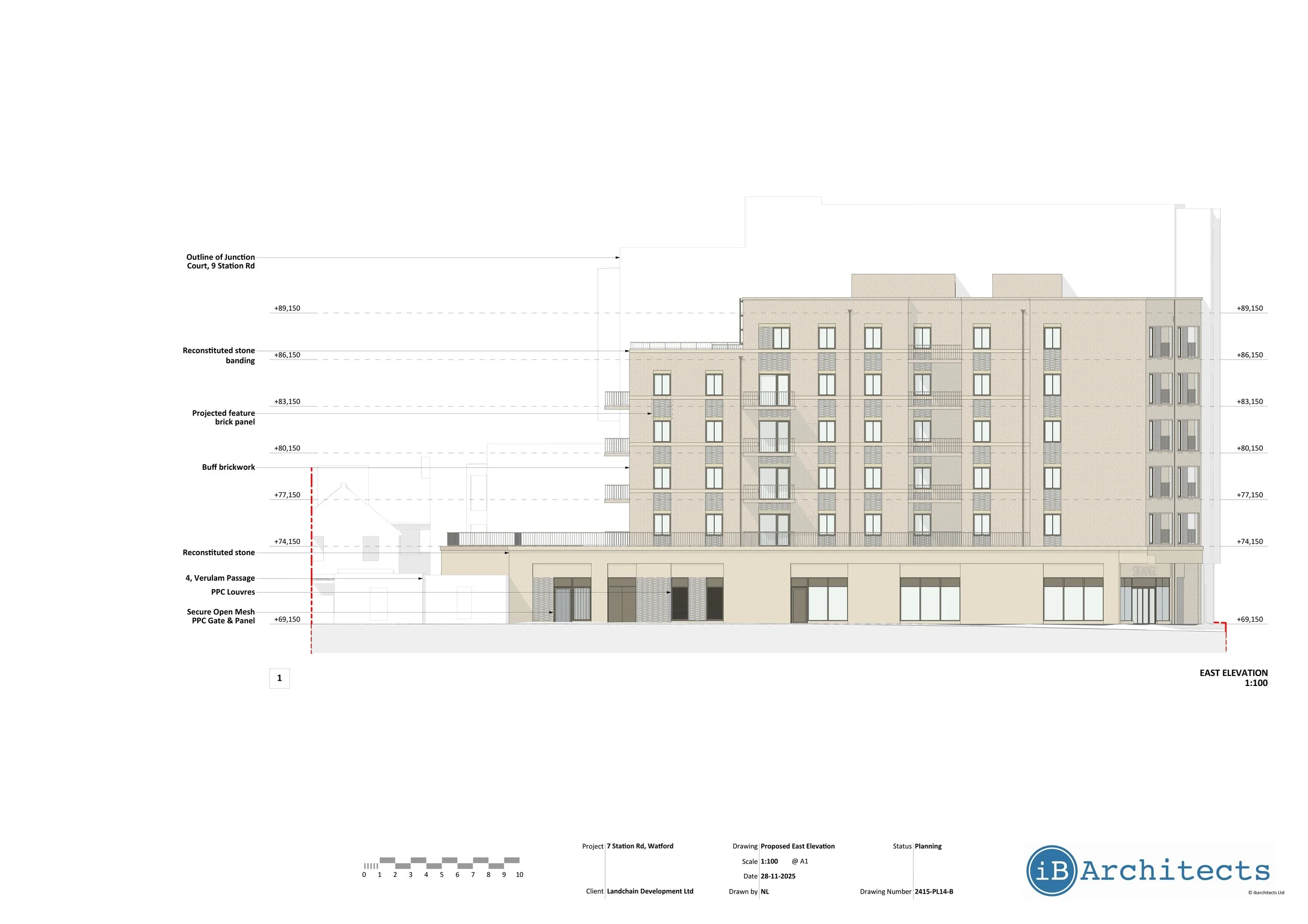
A carefully developed massing strategy steps the building down towards neighbouring homes and sets back the building line for the residential stories to reduce overshadowing and visual impact on Verulam Passage. The overall massing aims to minimises harm to neighbouring amenity, ensuring compliant daylight performance while retaining a coherent urban presence along Station Road. Windows are positioned to balance privacy with daylight, creating desirable living spaces.
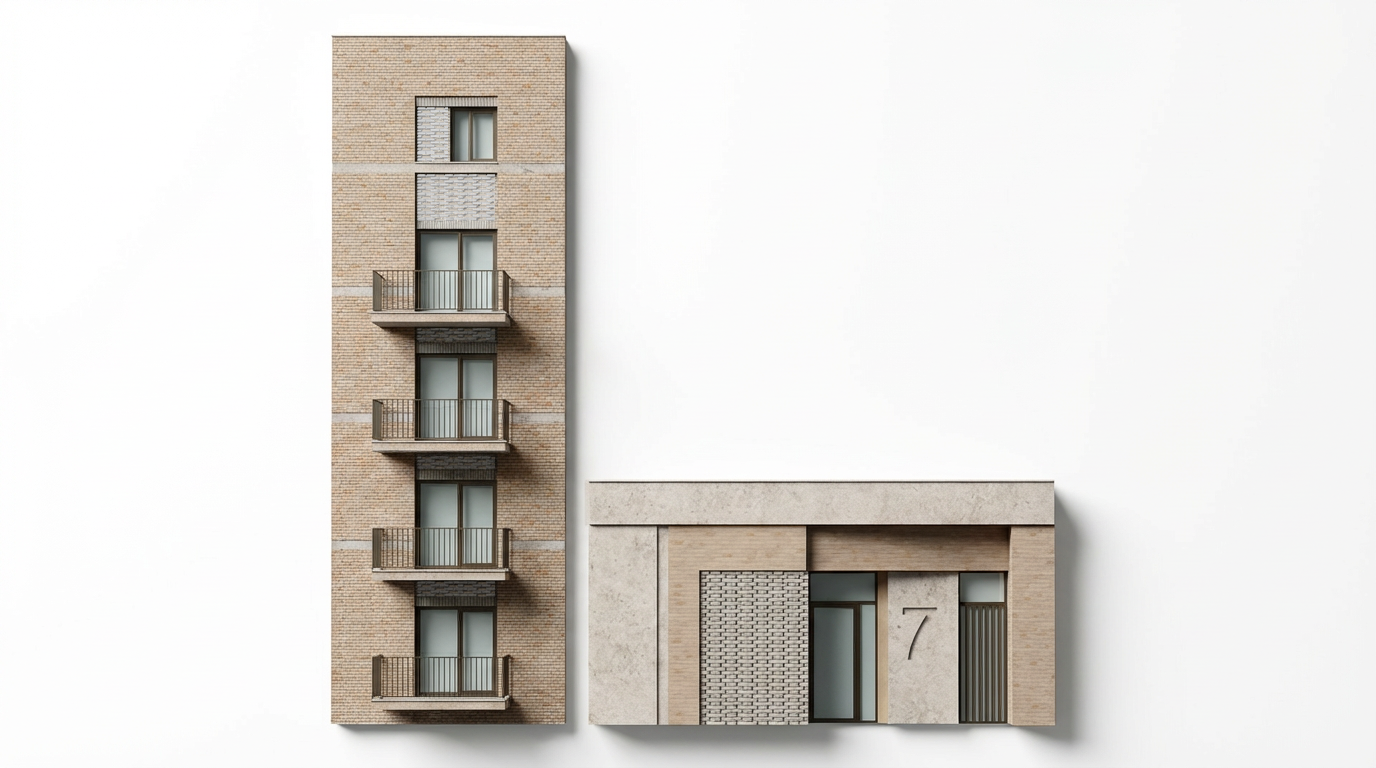
Architecturally, the building adopts a refined buff brick façade with deep reveals and inset balconies, creating solidity and texture that resonate with the surrounding context. A reconstituted stone base establishes a strong commercial frontage, while subtle brick detailing references Watford’s printing heritage through linear motifs inspired by traditional type setting or “slugs”. A chamfered corner entrance addresses the station approach and enhances the visibility and activity of the proposed commercial unit.
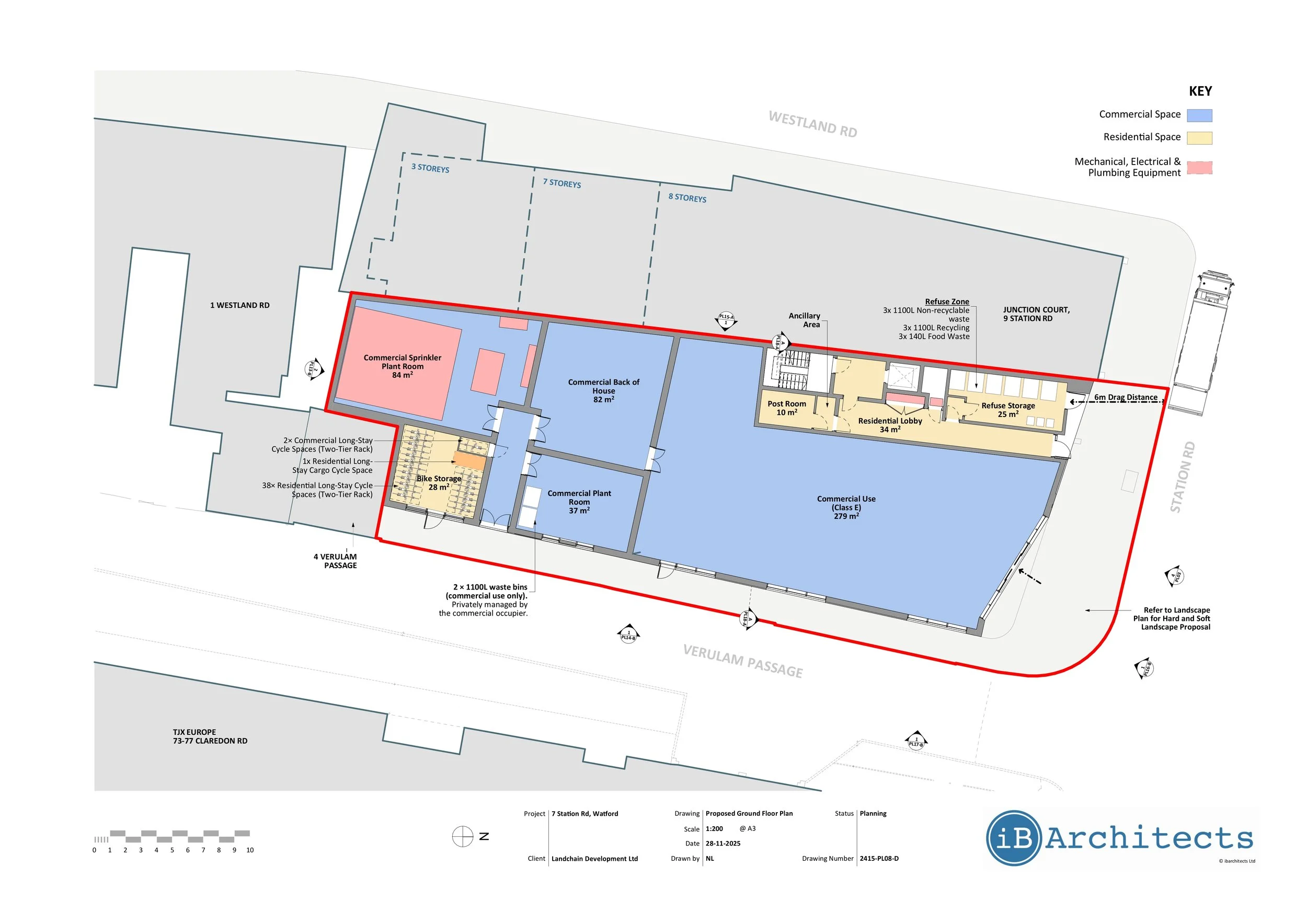
One of the major problems identified during early analysis was the unsafe and uncomfortable pedestrian experience along Verulam Passage. The scheme resolves this by setting the building line back to create a new dedicated footpath, introducing rain gardens, planting and integrated seating. This transforms the route from a vehicle‑dominated back‑of‑house space into a safe, inclusive and attractive pedestrian environment. Servicing is redirected to Station Road to eliminate conflict along the passage.
Inside the building, the residential layouts have been optimised through several design iterations, increasing the number of dual‑aspect homes and ensuring every apartment benefits from private external amenity. Light‑toned balcony reveals help reflect daylight deeper into living spaces that face north, addressing overshadowing created by surrounding taller buildings. Several flats are designed to meet modern accessibility standards, and circulation is arranged to provide a clear and legible route from street to apartment.
Sustainability principles are proposed throughout with an envelope‑led energy strategy, thoughtful glazing design to reduce overheating, and the integration of SuDS features such as rain gardens into the public realm. The scheme supports car‑free urban living, taking advantage of immediate proximity to national rail, overground and bus services. Cycle storage is provided for all residents and visitors to encourage sustainable travel.
The design has been strengthened through constructive engagement with Watford Borough Council and the Watford Place Shaping Panel. Their feedback informed key improvements including massing adjustments, enhancements to the public realm, increased residential quality and refined architectural detailing. This collaborative process has shaped a scheme that is both contextually sensitive and ambitious in its contribution to the regeneration of the Watford Gateway area.
Now submitted for planning, the proposals aim to revitalise a prominent brownfield site, improve the station approach, deliver new homes in a highly accessible location, and create an active commercial frontage that contributes to the vitality of Station Road. The project demonstrates how thoughtful design can solve challenging site conditions and unlock meaningful public and community benefits.