
Dementia Hub, Newbury
Location: Newbury, West Berkshire
Client: West Berkshire Dementia Hub & Greenham Trust
Status: Competition Entry
iB Architects were invited to participate in a design competition for a new dementia hub in West Berkshire. The brief called for a purpose-built facility that would act as a central anchor for dementia services across the region, combining NHS provision, voluntary sector support, and community amenities in a single, accessible location. The ambition was to create a space that would enable people living with dementia to live as well as possible, while also supporting their carers and families throughout the dementia journey.
The proposed site, adjacent to West Berkshire Community Hospital, offered over four hectares of undeveloped land with strong potential for integration into the wider healthcare setting. However, it also presented several challenges. A 10-metre buffer was required along the western boundary due to level changes, and the northern edge of the site was identified as having potential flood risk. In addition, the proximity to residential properties to the south necessitated careful consideration of overlooking and overshadowing. Our proposal responded by siting the building further south than originally suggested, maintaining a respectful distance from neighbouring homes while allowing for future expansion.
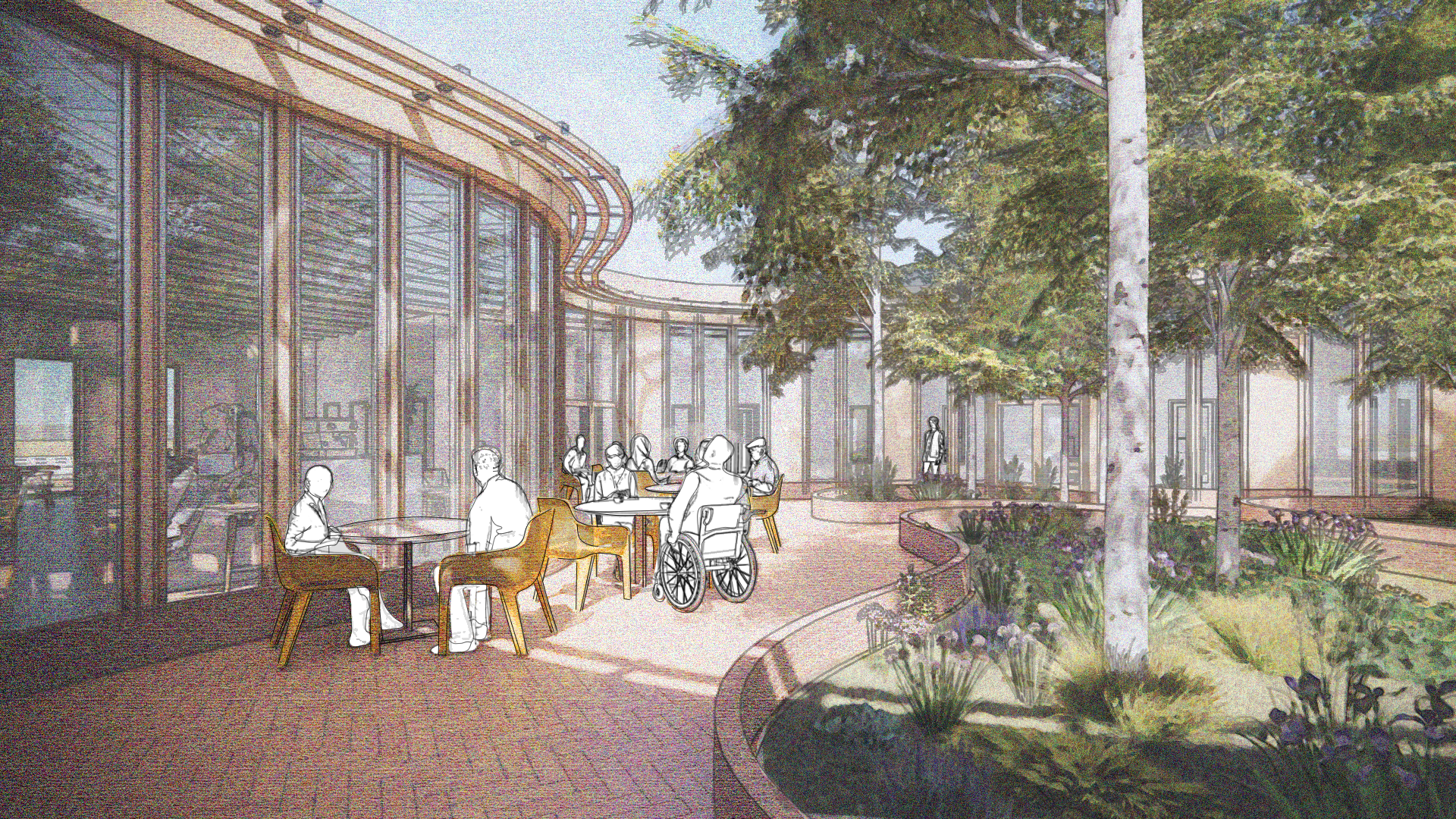
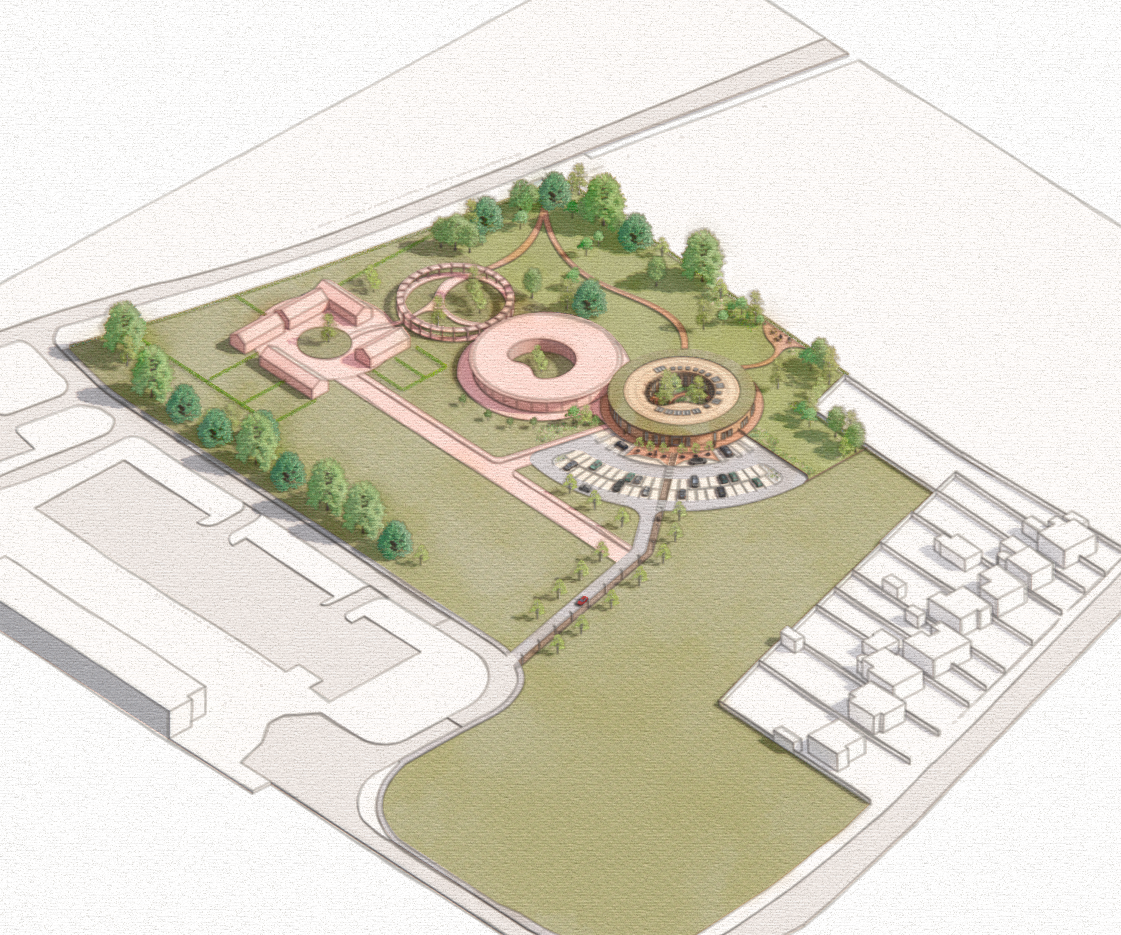
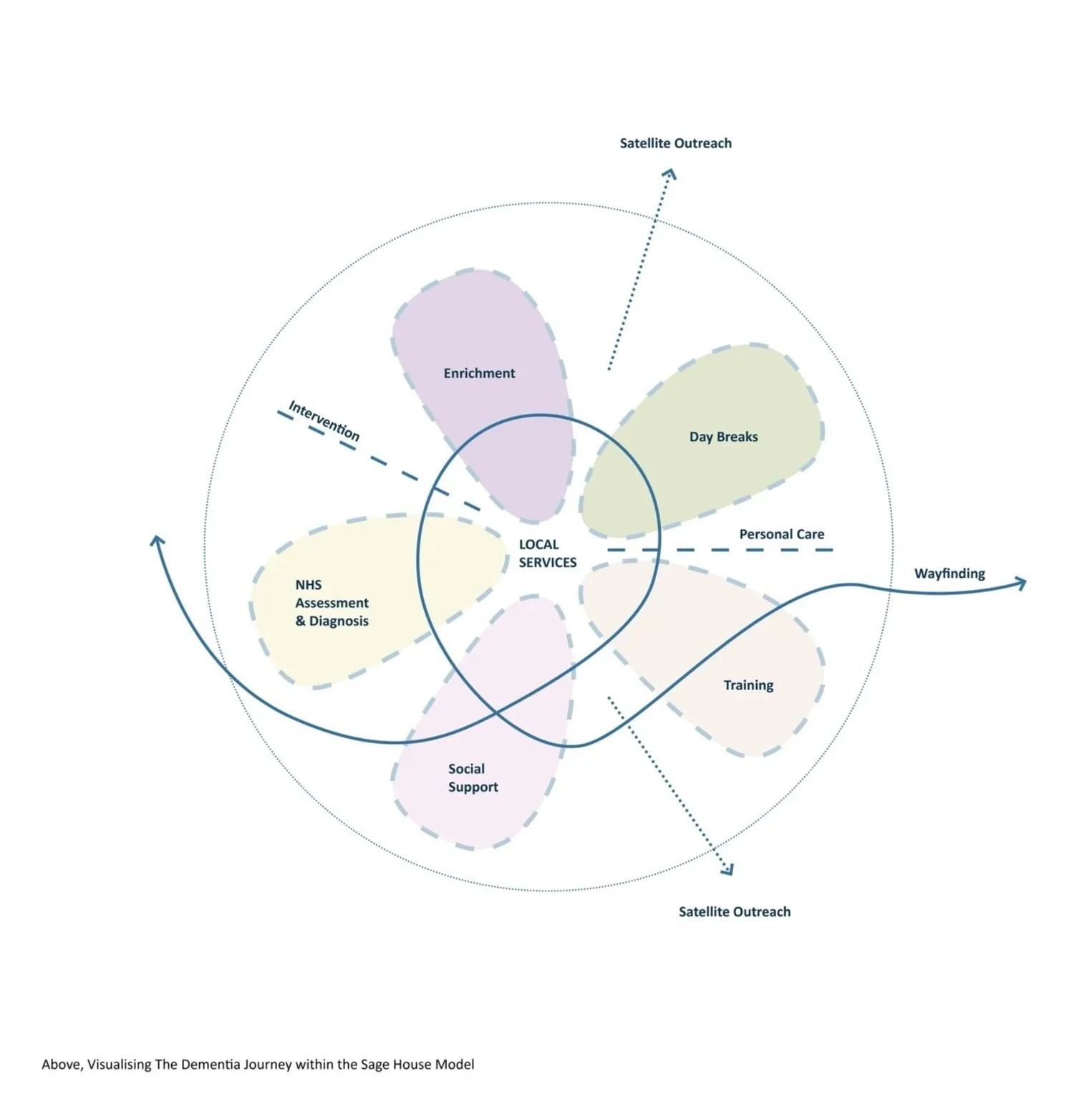

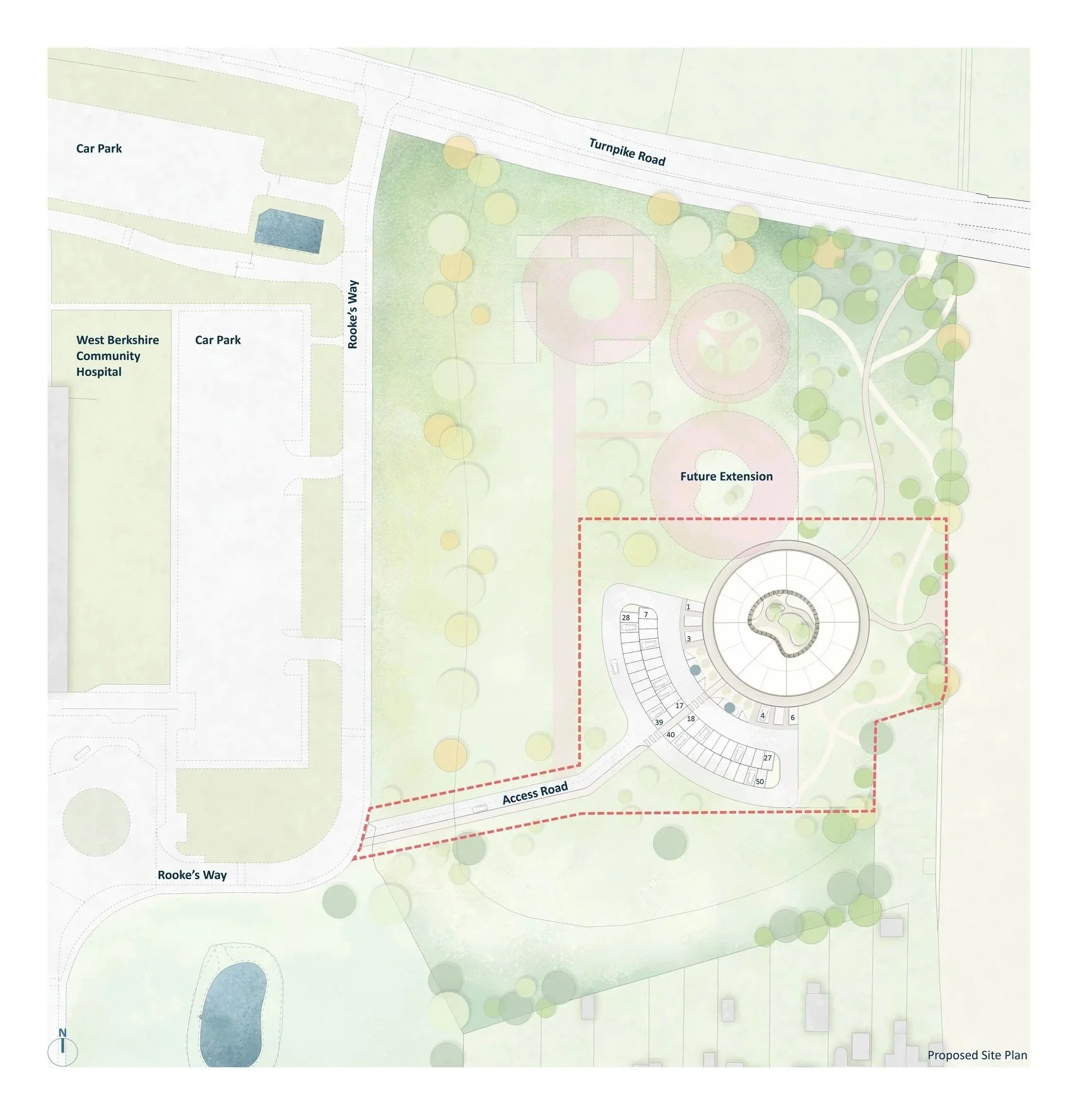
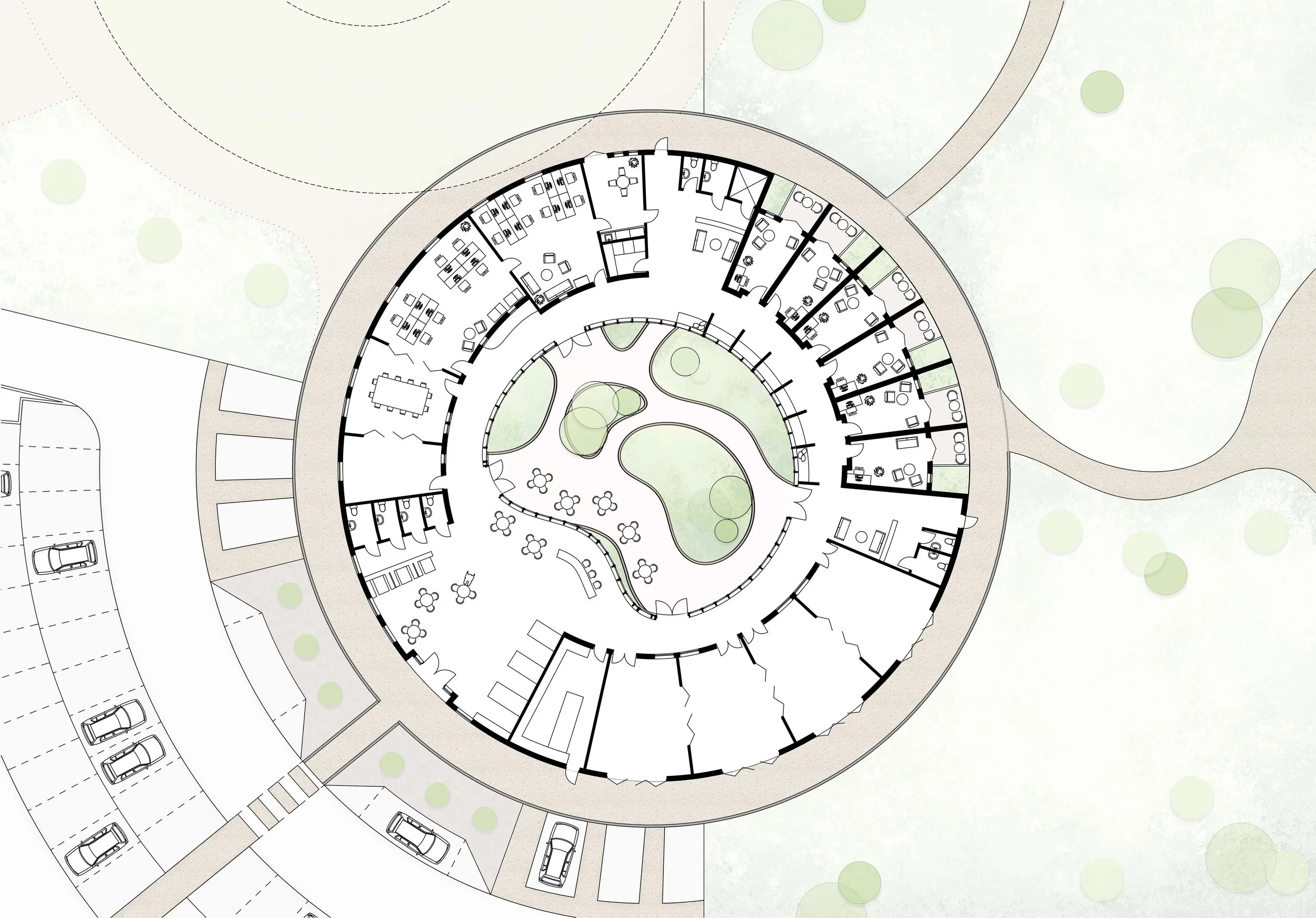
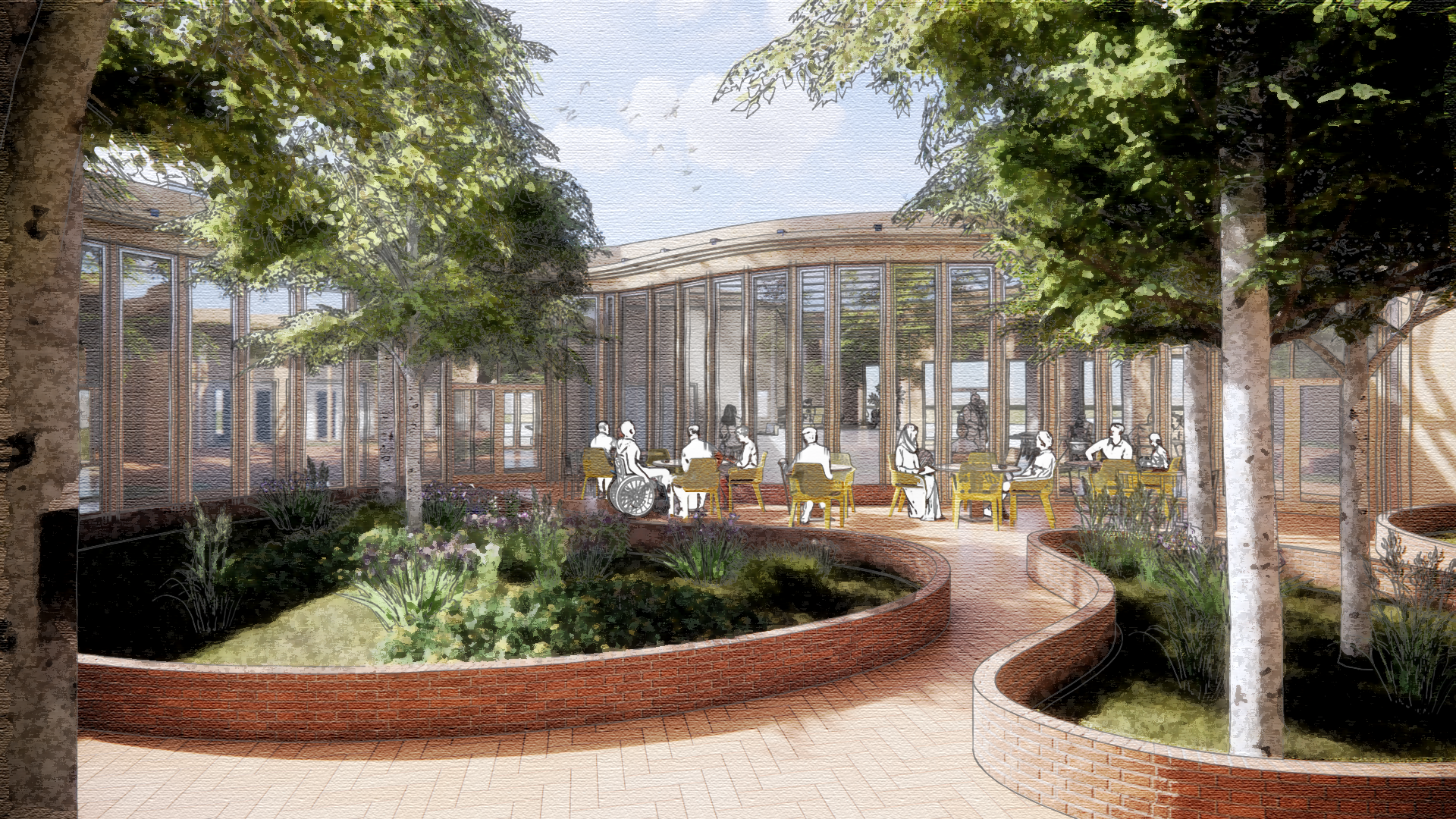
From the outset, our approach was shaped by extensive research into dementia-friendly design. Drawing on guidance from the University of Stirling and Kirklees Council, as well as the proven Sage House model, we developed a concept that prioritised clarity, comfort, and connection to nature. The building adopts a circular form, arranged around a central communal garden, with a single corridor supporting intuitive wayfinding. This layout removes dead ends and vertical circulation, which are known to cause distress and confusion for people living with dementia.
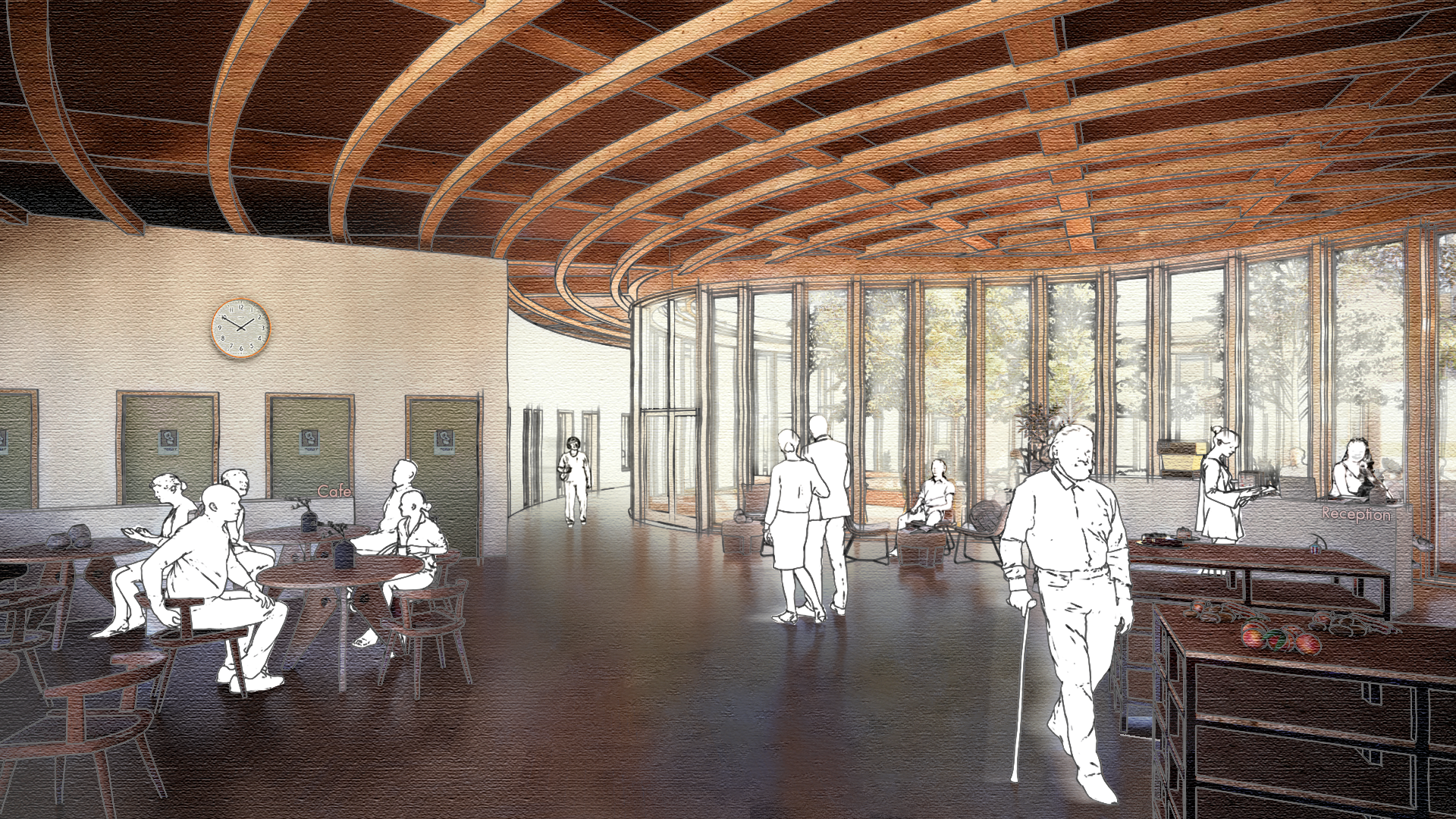
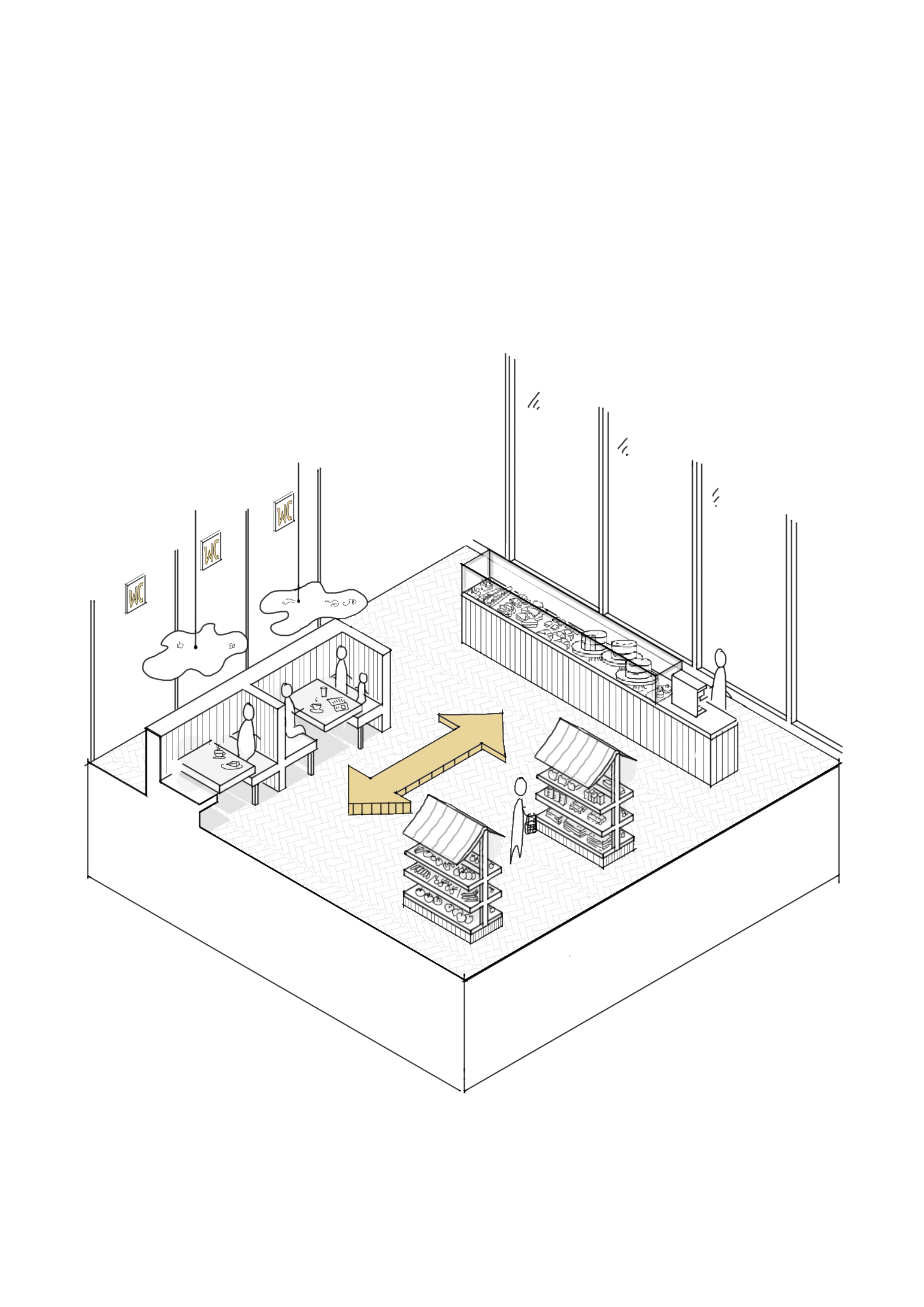
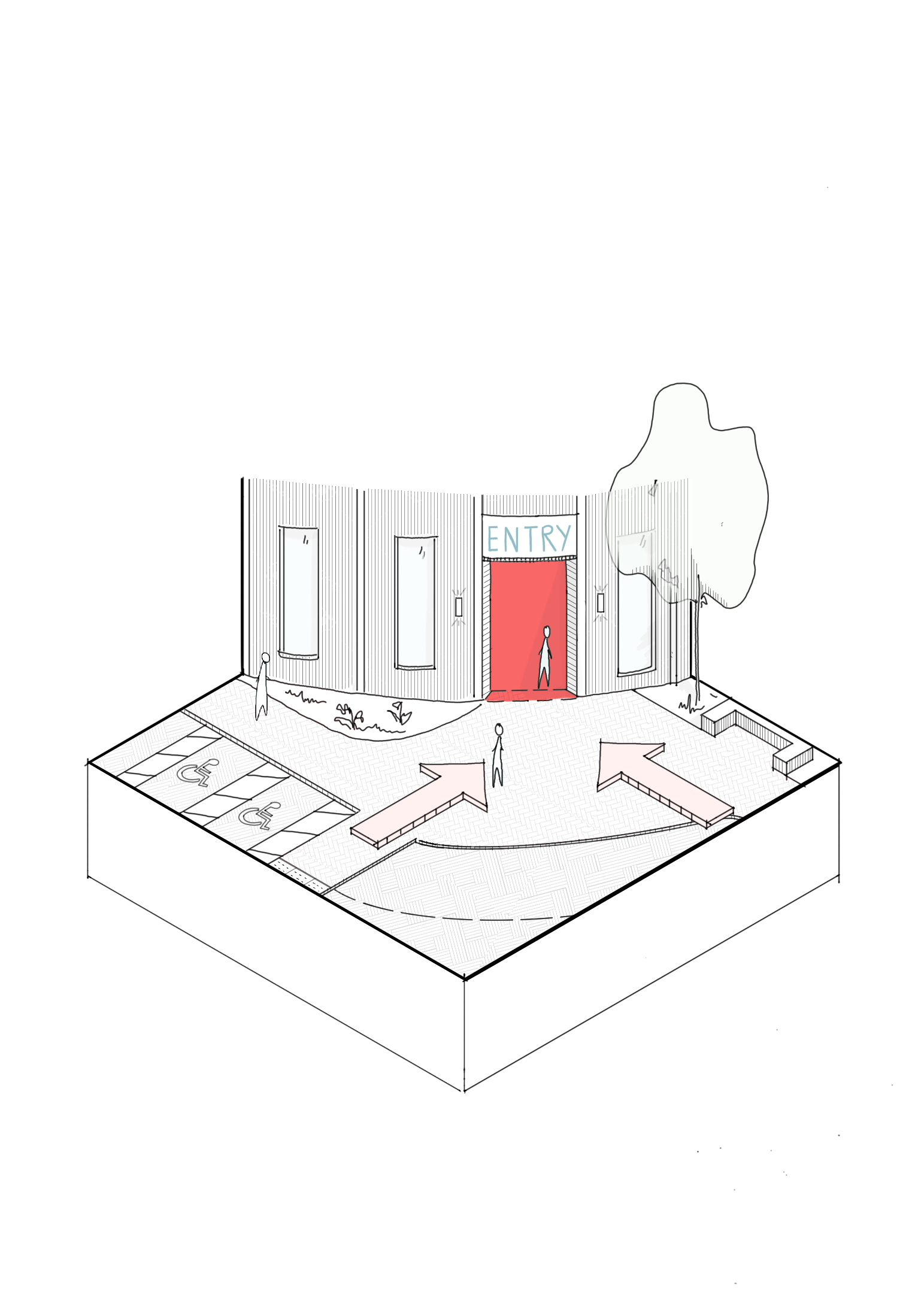
Visitors would arrive through a welcoming café space, designed to encourage social interaction and provide a calm, familiar environment. Adjacent to the café, a small shop and demonstration kitchen offer opportunities for everyday engagement and skill-building. These spaces are intended to feel domestic rather than institutional, with warm materials, soft lighting, and consistent layouts that support ease of use.
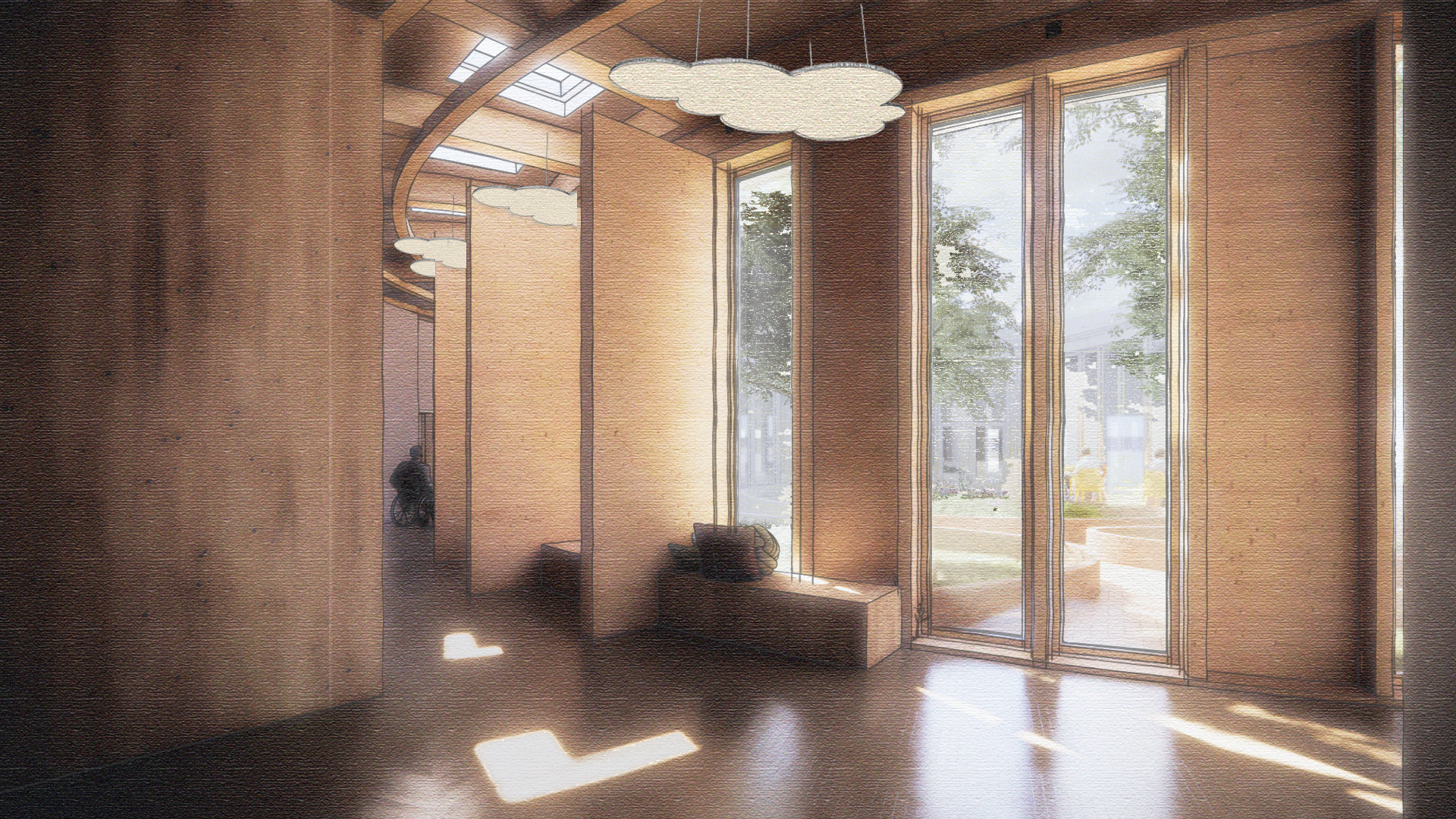
Beyond the entrance, the building unfolds in a continuous loop, with flexible activity rooms, therapy spaces, and memory assessment rooms positioned to ensure acoustic separation and visual access to greenspace. Informal waiting areas, designed as pocket libraries, replace traditional clinical waiting rooms, offering moments of rest and reflection. Recessed doorways, integrated bench seating, and tactile surfaces support navigation and comfort throughout.
Material choices were carefully considered to avoid a clinical atmosphere. Timber wall panelling, natural textures, and muted colour palettes create a warm and inviting environment. The central garden, visible from all key spaces, provides secure access to nature, supporting wellbeing and reducing anxiety. Permeable surfaces and rain gardens form part of a wider sustainable drainage strategy, while the building’s roof is subtly pitched to optimise solar gain for roof-mounted photovoltaic panels.
Sustainability was embedded in the design from the outset. A fabric-first approach ensures airtightness and thermal efficiency, while MVHR systems support air quality and heat retention. The site layout encourages active travel, with consistent pedestrian pathways and provision for both short and long-stay cycle parking. EV charging infrastructure is included, with capacity to scale as the site grows. These strategies were developed to align with local planning policies on climate change, flood risk, biodiversity, and community provision.
The proposed accommodation schedule includes a central café and kitchen, four flexible activity rooms, therapy and memory assessment spaces, general administration offices, a smart equipment zone, training and meeting rooms, and staff facilities. Outdoor space is integral to the design, with garden areas accessible from key rooms and a car park providing over 50 spaces, including designated pick-up and drop-off points and discrete ambulance access.
While this was a competition entry, the design reflects iB Architects’ commitment to creating places that deliver measurable social value. Our proposal was shaped not only by technical expertise but also by lived experience, with input from dementia care specialists. The result is a building that places people at its heart - a space that is welcoming, adaptable, and rooted in the needs of its users.
Feedback from the client and advisory groups was encouraging, with particular praise for the clarity of the design, the integration of dementia research, and the thoughtful approach to stakeholder engagement. Although we were not appointed to take the project forward, the competition provided a valuable opportunity to explore how architecture can support health, dignity, and community resilience.
Conceptual walk-through video of iB Architects proposed Dementia Hub.